This bikini styles guide helps you identify the design, decide which features matter to you, and compare a small shortlist with AI. It focuses on bikini swimwear, with one-pieces and tankinis included for context.
TL;DR: Bikini Style AI Guide
Read the features separately: top shape, straps, construction, waist rise, leg opening, and coverage.
Choose tops and bottoms independently when your preferred sizes, cuts, or coverage differ.
Check construction for support. A style name alone cannot tell you how a swimsuit will feel or stay in place.
Use AI try-on to compare appearance. Confirm sizing, comfort, and practical performance through product information and real try-on.
Swimwear Styles Explained: Bikinis, One-Pieces, and Tankinis
Choose the format before the details.
Start with the way you want the swimsuit to work as an outfit.
Swimwear format | What to recognize | What to consider |
Bikini | Separate top and bottom | Independent choices for shape, size, and coverage |
One-piece | A connected garment across the torso | Torso length, neckline, back design, and leg opening |
Tankini | A longer, tank-style swim top with separate bottoms | Top length, overlap, and whether the hem stays comfortable |
Swim top with shorts | A swimwear combination using a separate top and shorts | Shorts length, waistband, and intended activity |
These types of swimsuits still vary considerably. A one-piece may have cutouts; a bikini can combine a longer top with fuller-coverage bottoms. Inspect the actual design instead of assuming its category determines coverage.
Types of Bikini Tops: Necklines, Straps, and Support
Identify the shape, then check the construction.
Use the following bikini top styles as visual starting points. Strap arrangements and structural features can overlap with several shapes.
Triangle Bikini Tops
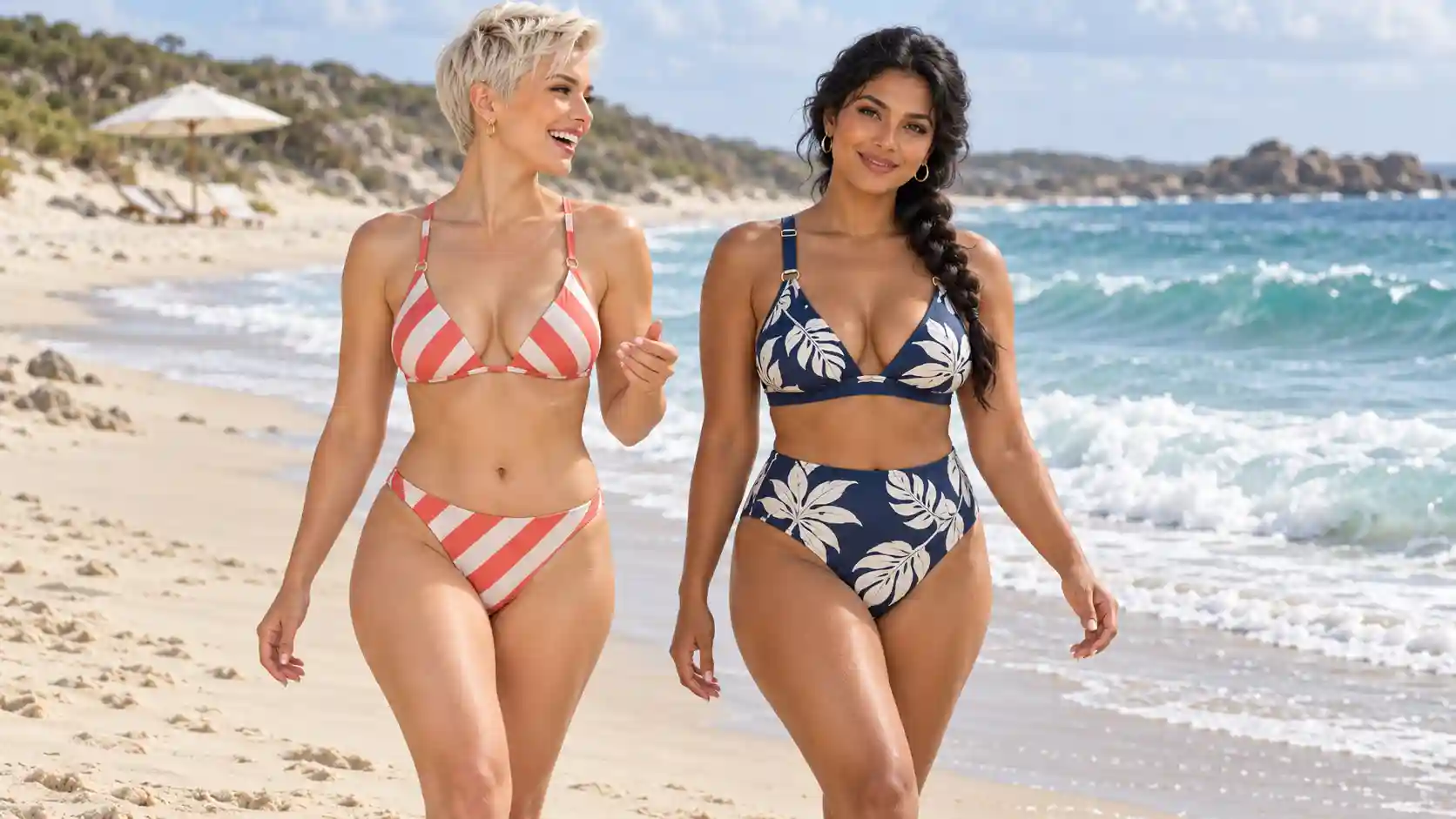
Recognize it: two triangular cup areas with a relatively open neckline.
Choose this when you like a classic beach silhouette. Compare cup dimensions, the band, and how the straps connect; triangle tops can differ substantially in construction.
💡 Check:
Adjustability, lining, fastening, and whether the cup shape gives the coverage you want.
Fuller-cup versions exist, including designs in Seafolly DD swimwear range, so avoid treating every triangle top as the same support option.
Bandeau Bikini Tops
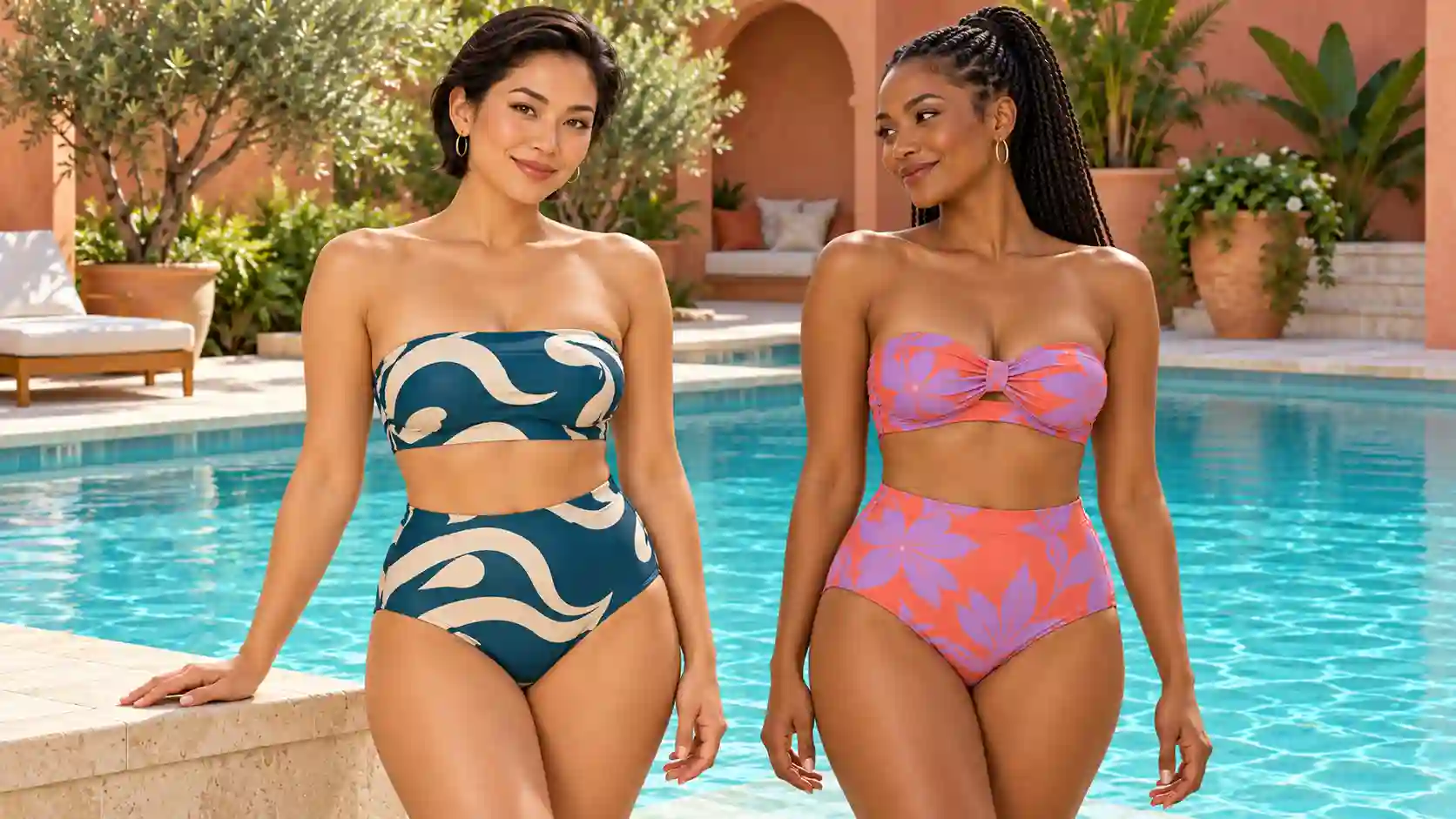
Recognize it: a generally horizontal, band-like front, sometimes gathered, twisted, or shaped at the center.
A bandeau can create a clean neckline. Some versions are strapless, while others include removable or convertible straps.
💡 Check:
The back fastening and any side boning, grip lining, or internal structure. If the design can be worn several ways, examine the configuration you actually plan to use.
Scoop and Bralette Bikini Tops
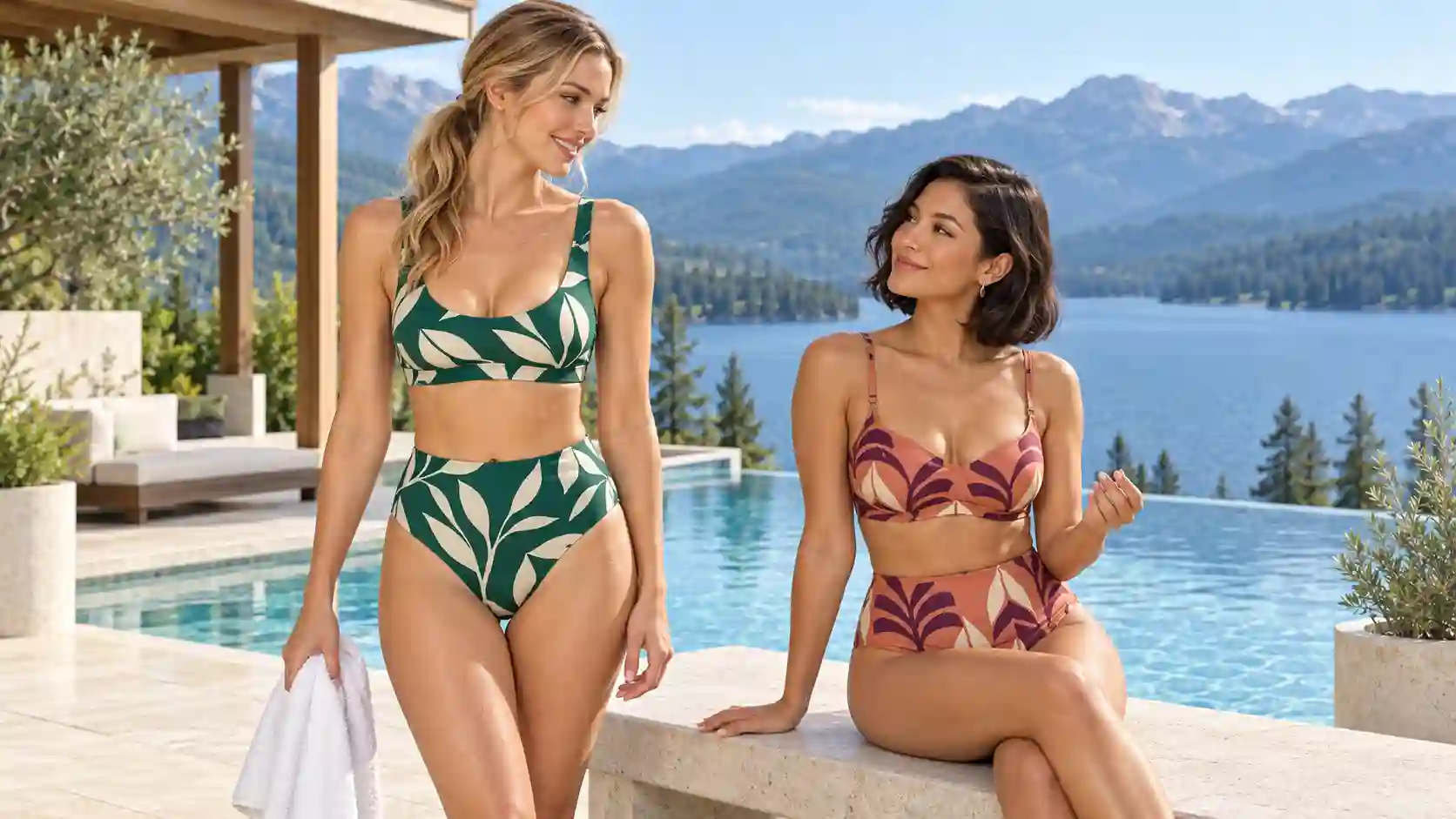
Recognize it: a scoop describes a rounded neckline; bralette describes a bra-like shape, often with a softer construction. One top can be both.
These are useful starting points for a simple, understated look.
💡 Check:
Neckline depth, band width, strap adjustment, and the product’s internal structure. Similar-looking fronts can have different fastenings and support features.
Balconette Bikini Tops
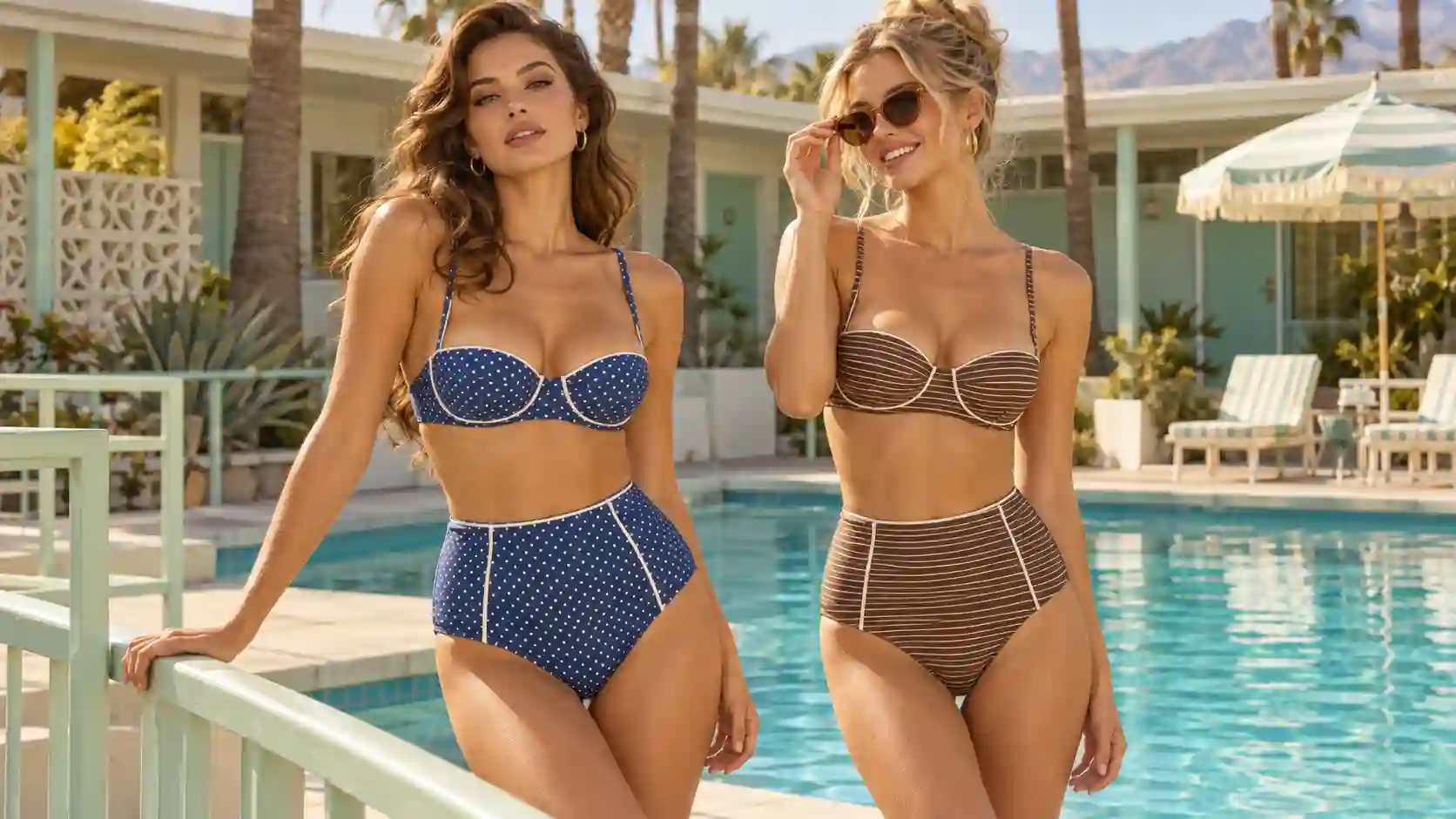
Recognize it: defined cups and a comparatively open, often more horizontal neckline.
Consider this silhouette if you like a structured or retro-inspired appearance.
💡 Check:
Cup shape, strap position, wire, and padding separately. For example, Calzedonia describes a balconette swimsuit top that has underwire but no padding. Those terms describe different features.
High-Neck and Sport-Inspired Bikini Tops
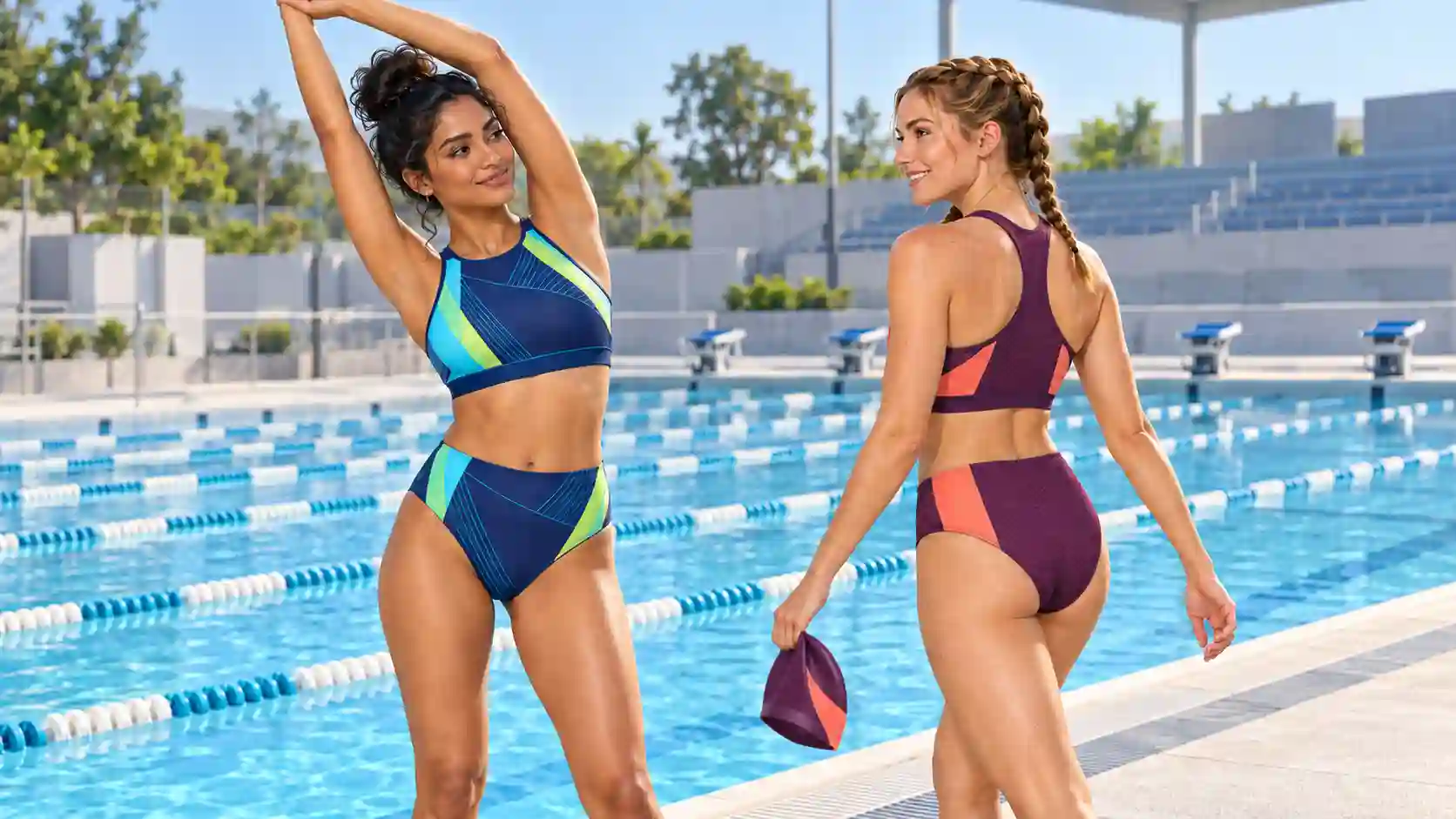
Recognize it: a higher front neckline, sometimes combined with broader straps, a racerback, or athletic-looking panels.
Explore these when you prefer more fabric across the upper chest or a sporty aesthetic.
💡 Check:
Armholes, closures, band security, and the manufacturer’s intended use. A sporty appearance alone does not establish how a top performs during swimming or other activity.
One-Shoulder Bikini Tops
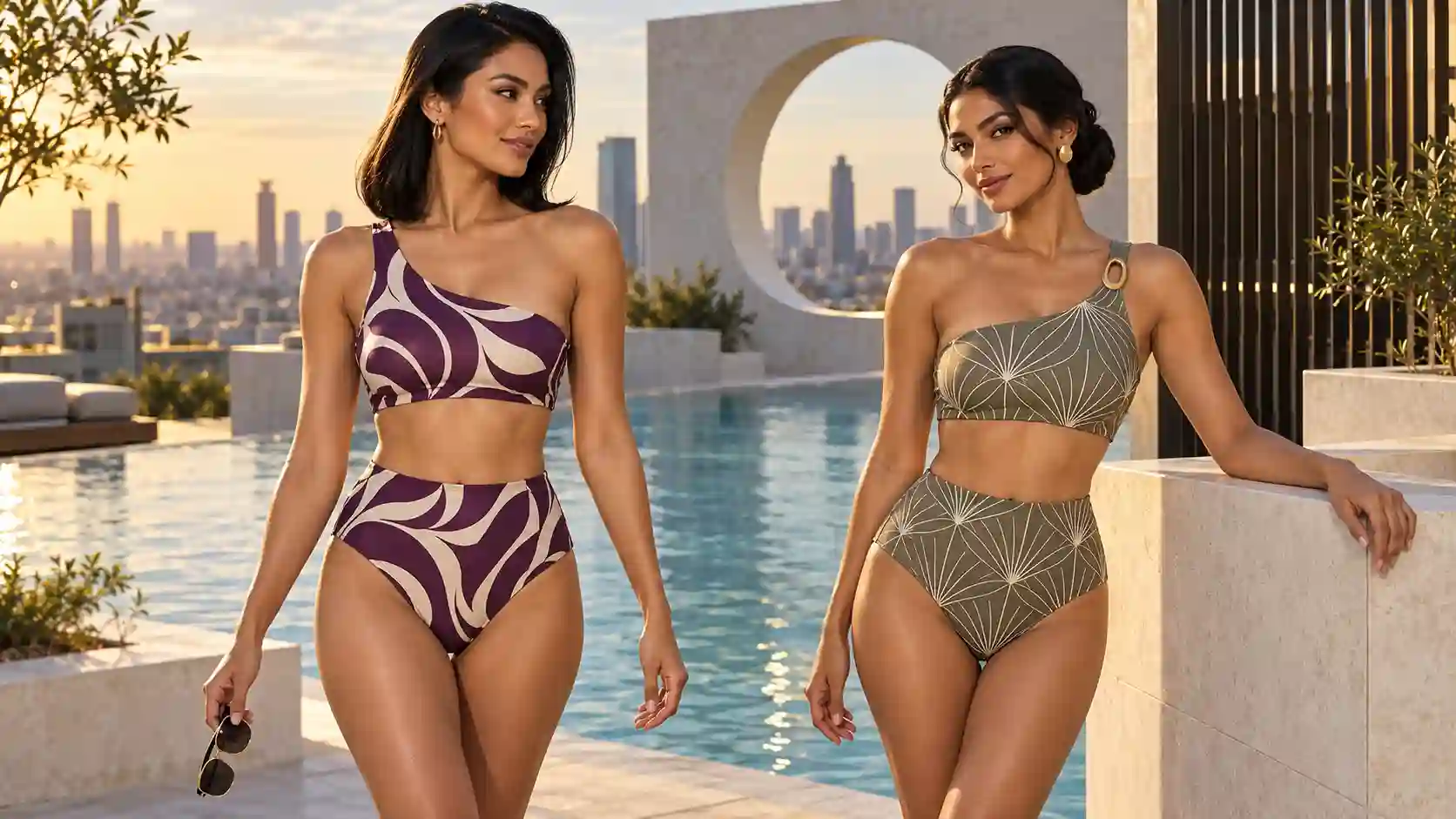
Recognize it: an asymmetric neckline supported or connected on one side.
This can be an expressive choice for a resort or fashion-focused look.
💡 Check:
The precise shoulder side, strap connection, and internal structure. When comparing designs, distinguish decorative hardware from functional fastenings.
Decode the Extra Labels
Halter: straps connect around the neck; this can accompany different front shapes.
Underwire: wire forms part of the cup structure.
Padded or unpadded: describes padding, independently of wire.
Longline: the top extends farther down the torso.
That is why “triangle vs halter bikini” is not always an either-or choice. Similarly, Seafolly sells a Halter Bandeau: the name combines front shape and strap configuration.
Bikini Bottom Styles: Waist Rise, Leg Cut, and Coverage
Read the waist, leg opening, and back separately.
For bikini bottoms, use three independent checks:
Rise: where the waistband sits on the torso.
Leg cut: how high the opening extends at the hip.
Coverage: how much the design covers, including at the back.
High-Cut vs High-Waisted Bikini Bottoms
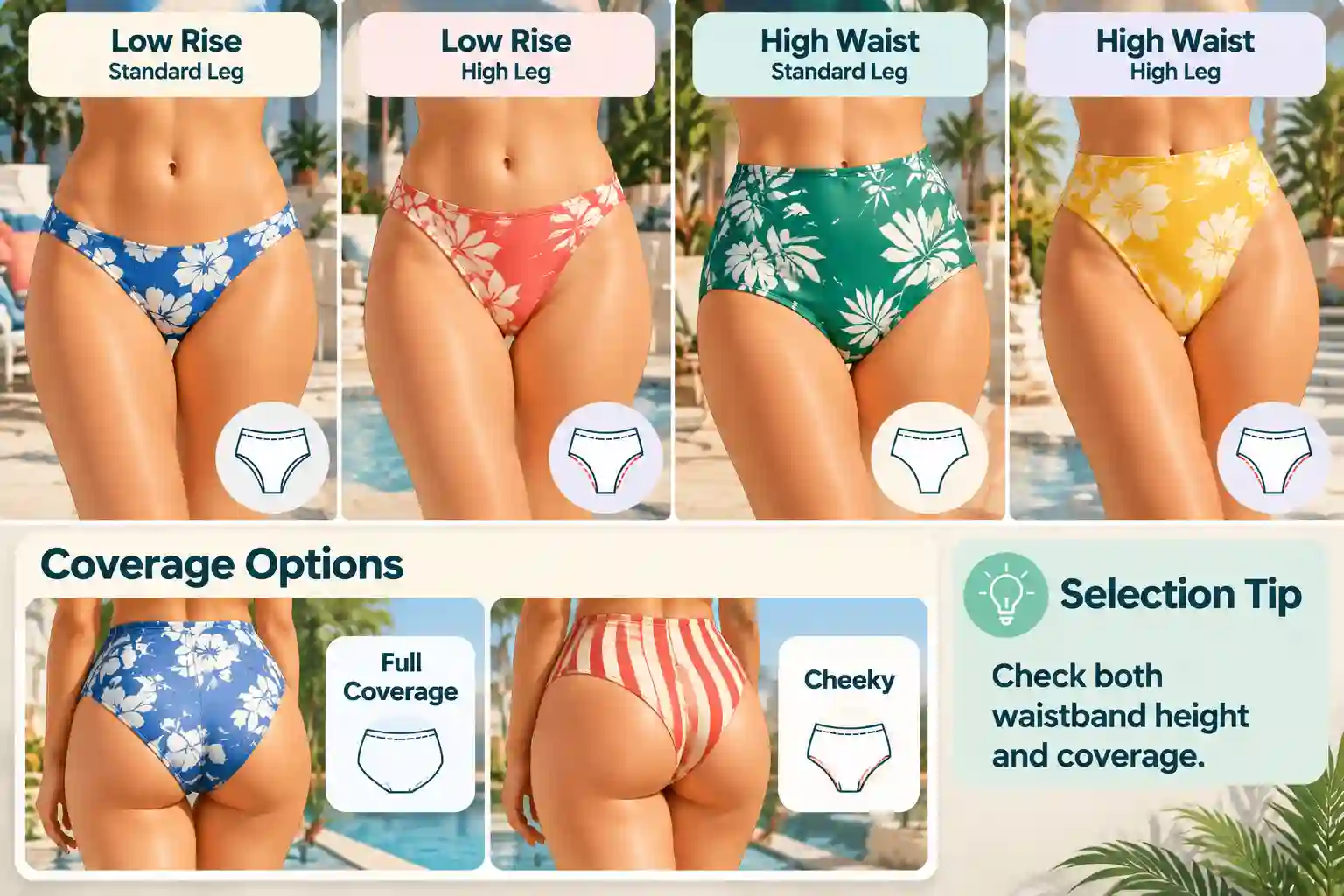
High-waisted describes a higher waistband.
High-cut, also called high-leg, describes the leg opening. A bottom can have either feature or both.
Imagine four possible combinations: lower rise with a standard leg, lower rise with a high leg, higher rise with a standard leg, and higher rise with a high leg. Compare the actual lines instead of treating these as a single scale.
Coverage is another choice. Seafolly lists a high-waisted bottom with a high legline and full coverage, while Andie offers high-waisted cheeky designs.
Selection tip: If you want more coverage at the waist and seat, check both requirements explicitly.
Full-Coverage vs Cheeky Bikini Bottoms
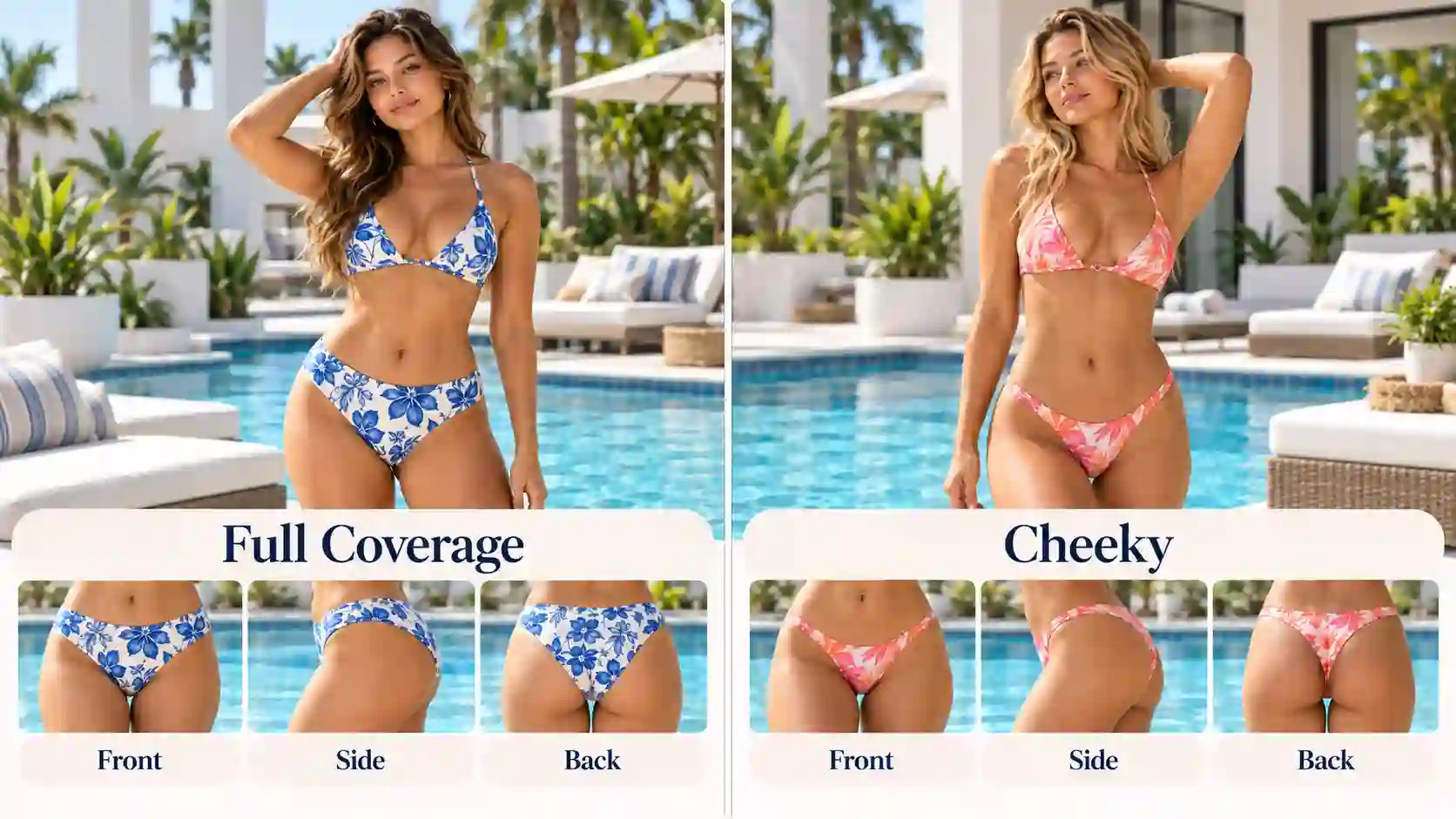
Full-coverage styles generally cover more of the seat, while cheeky styles expose more. Brazilian is another term used for reduced-coverage designs, but naming and cuts vary between brands.
Check front, back, and side views. A front photo cannot reliably show rear coverage, and a waistband pulled higher for styling can change your impression of the cut.
Selection tip: Compare garment outlines and product descriptions rather than expecting a universal coverage percentage for each name.
Tie-Side, V-Front, and Swim Shorts
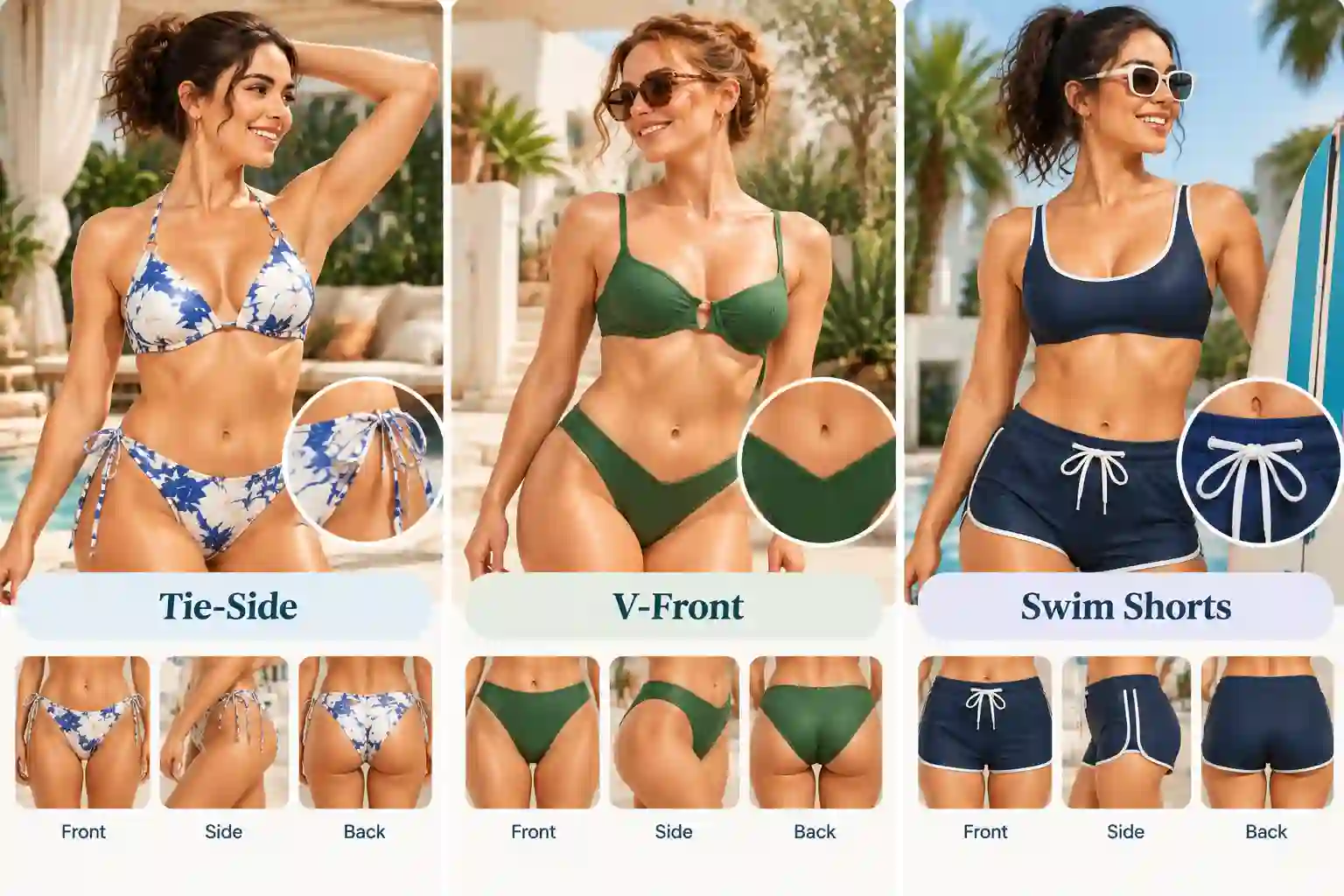
Tie-side bottoms add side fastenings. Inspect the width of the main fabric panels as well as the ties.
V-front bottoms have a dipped or angled front waistline; check their side rise and back separately.
Swim shorts or boyshort-style bottoms offer a different silhouette. Review inseam, leg opening, waistband, and intended use.
Classic briefs and hipsters are also useful search terms, but their rise and coverage can vary. These labels help you find options; the garment images explain the specific design.
How to Choose a Bikini for Your Preferences and Plans
Start with what you want to feel and do.
You do not need a body-shape category to begin. Identify your priorities, then look for the features that address them.
Your priority | What to compare |
Buying your first bikini | Familiar shapes, preferred coverage, and straightforward adjustment |
More bust support | Cup sizing, band construction, straps, and any internal support |
Less padding or a lighter look | Padding information separately from cup shape and wire |
More coverage | Neckline, top length, waist rise, and seat coverage individually |
A different waistline or torso proportion | Top length, waistband position, and the space between the pieces |
Swimming or active use | Intended activity, fastening security, and comfort during real movement |
Resort or photo styling | The neckline, silhouette, and details you want to emphasize |
Different top and bottom sizes | Separates and the size information for each piece |
For supportive bikini tops, examine the whole construction. Bravissimo swimwear fit guidance emphasizes a comfortable band, cups that contain the bust, and straps that sit comfortably. Use those as real fitting checks, alongside the specific brand’s guidance.
If you are exploring proportions, compare two waistband heights while keeping the top similar, or two top lengths with the same bottoms. This helps you identify your own preference without assuming one silhouette suits every person with a particular body shape.
Make a Personal Style Selection Card
Write down:
Top: preferred front shape, straps, and adjustment features.
Bottom: preferred rise, leg opening, and coverage.
Purpose: what you plan to wear it for.
Two essentials: the features you are least willing to compromise on.
Still to confirm: size, construction, or comfort questions.
Use the card to choose two or three candidates. A smaller, purposeful shortlist is easier to compare than many unrelated swimwear styles.
Mix and Match Bikini Tops and Bottoms for More Looks
Build combinations with a clear connection.
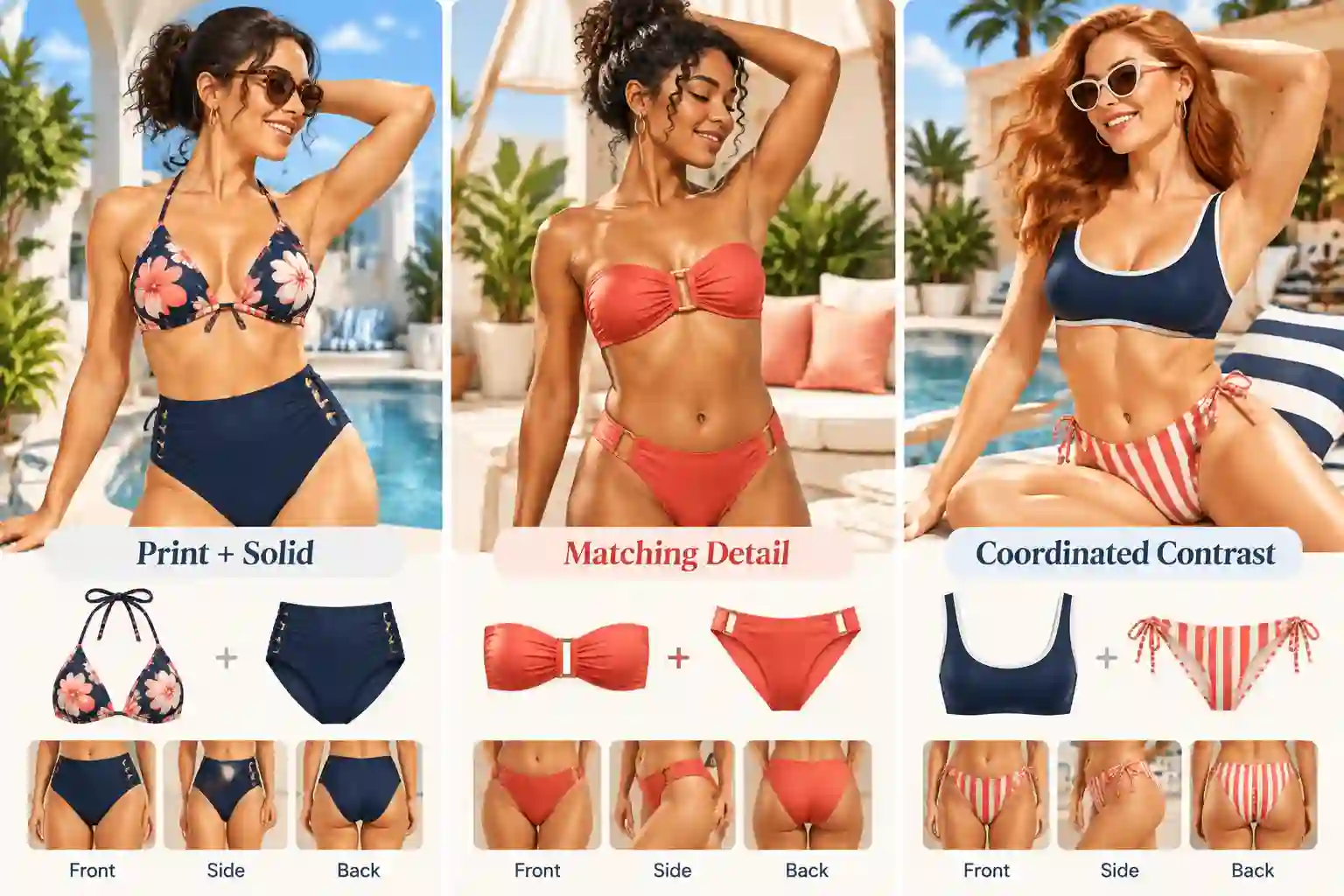
Bikini separates let you choose each piece for its own role. The connection between them can come from color, trim, texture, or a shared design detail.
Try three approaches:
Print plus solid: pick one color from the print for the other piece.
Matching detail: repeat a trim color or a restrained hardware finish.
Coordinated contrast: choose deliberately different colors with a similar visual intensity or a clear neutral anchor.
These are styling ideas, not tested product combinations. Keep practical choices independent: a top chosen for its construction can pair with bottoms chosen for their rise and coverage. Check each item’s size and details before buying.
AI Clothes Changer for Swimwear: Preview Your Shortlist
Compare the cut while keeping the person consistent.
An AI clothes changer can help you explore how different swimsuit designs look in a photo. Here, clothes swap means a digital clothing edit, specifically a swimwear preview.
The AI Bikini Generator lets you start with an adult photo or available model, choose a swimwear preset or reference, and add optional instructions.
Plan an AI Clothes Swap with Clear References
Use your own adult photo or one you have permission to edit. Choose an image with clear lighting and little obstruction around the outfit.
Pair it with a reference that shows the complete swimsuit design. Translate your selection card into specific features: a scoop neckline, two shoulder straps, high-waisted bottoms, or a particular leg opening.
Compare Swimwear Styles on the Same Photo
Keep the original photo as the starting point for each candidate. When comparing cuts, use similar colors and request consistent pose, framing, light, and background.
Focused prompt example:
Apply the swimwear from the reference. Preserve the person’s recognizable features, natural proportions, pose, background, and lighting. Keep the scoop neckline, two shoulder straps, and high-waisted bottoms consistent with the swimsuit reference. Leave the garment unobstructed.
Generate each candidate separately, then compare the visible differences. These instructions guide the result; they do not guarantee exact preservation.
For the basic workflow, see the AI Bikini Try-on Guide. For color and material changes after selecting a cut, use the AI Bikini Prompt Guide.
Check the Details Before Choosing
Review the image: face, proportions, neckline, strap connections, waistband, garment edges, and the details visible in the reference. A front-facing preview cannot establish back coverage.
Review the actual product: measurements, sizing system, fabric, support features, fastening, and intended activity. AI clothes swap results can simplify or invent details, so keep the product listing available for comparison.
Use virtual swimsuit try-on to narrow visual preferences. Confirm fit and comfort through the garment’s information and real try-on.
Find Your Next Swimwear Look with AI
Start with a shortlist you understand.
Choose two bikini styles with a clear difference, bring your selection card, and preview them with AI.
Save the look you prefer and the product details you still need to confirm.
Create with AI Bikini Generator
Swimwear Styles and AI Clothes Swap FAQs
Why Do Similar Bikini Styles Have Different Names Across Brands?
Brands describe different features and use their own naming conventions. Compare the front shape, straps, rise, leg opening, and coverage shown in the product images rather than relying on one label.
Should I Buy the Same Size in Every Swimwear Brand?
No. Check each brand’s measurements and sizing system, including regional labels. A letter size or cup-size label from one range may not translate directly to another.
Can I Buy Bikini Tops and Bottoms Separately?
Yes, when the brand offers separates. This lets you choose different sizes and cuts for each piece. Check whether the listing is for a complete set or one item.
What Makes a Good Swimsuit Reference for an AI Clothes Swap?
A clear image showing the complete design is a useful starting point. Keep straps, edges, and hardware visible, and avoid references dominated by text or unrelated products. Use images you have permission to use.
Can an AI Clothes Changer Tell Me Which Swimsuit Fits Best?
No. It can help compare appearance, but it cannot confirm physical fit, support, comfort, or performance in water. Use the preview alongside product measurements and real fitting checks.